
Bali: Where Beauty and Opportunity Grow Together
Ubud shows how nature, farming and real estate can reinforce one another. From NAVIN’s practice, we explore what regeneration means for investors, using Basecamp Bali as a concrete example.
In this article
Ubud is not a location that should be assessed on yield alone. Its appeal lies in the relationship between landscape, culture and everyday life. That makes the investment question more interesting, but also more demanding.
We therefore see a growing shift from sustainability to regeneration. Sustainability seeks to reduce harm. Regeneration goes further: over time, a place should be left stronger than it was before.
Why Ubud may appeal to investors
Ubud has a different profile from Bali’s coastal areas. Its value is less tied to beach tourism and more to landscape, cultural identity, wellness, food and a slower, more meaningful stay.
That profile may suit an investor who looks beyond the villa itself and considers the setting that supports demand over the long term. A villa in Ubud is not rented independently from its surroundings. Guests also choose rice fields, walking routes, local producers, art, ceremonies and the scale of the area.
This does not mean every Ubud investment is sound. Access, zoning, ownership structure, operations, maintenance and the relationship between acquisition price and projected income remain decisive. A strong setting can support value, but it cannot replace financial analysis.
From sustainability to regeneration
With sustainability, the central question is often: how do we reduce our negative impact? With regeneration, the question becomes: what improves because this project exists?
That question is more practical than it first appears. Consider whether:
- farmland remains productive rather than disappearing entirely;
- local families have a role beyond temporary employment;
- water is managed as a local system;
- soil quality improves or declines;
- residents and guests can meet without the area losing its character;
- results are monitored rather than described only in marketing language.
Regeneration is not a certification and it is not a guarantee of returns. It is a lens for assessing a project. An investor looks not only at what is being built, but also at how the surrounding landscape and community are expected to develop.
A regenerative project does not only sell a stay. It also invests in the conditions that give that stay lasting meaning.
Basecamp Bali as an example in Ubud
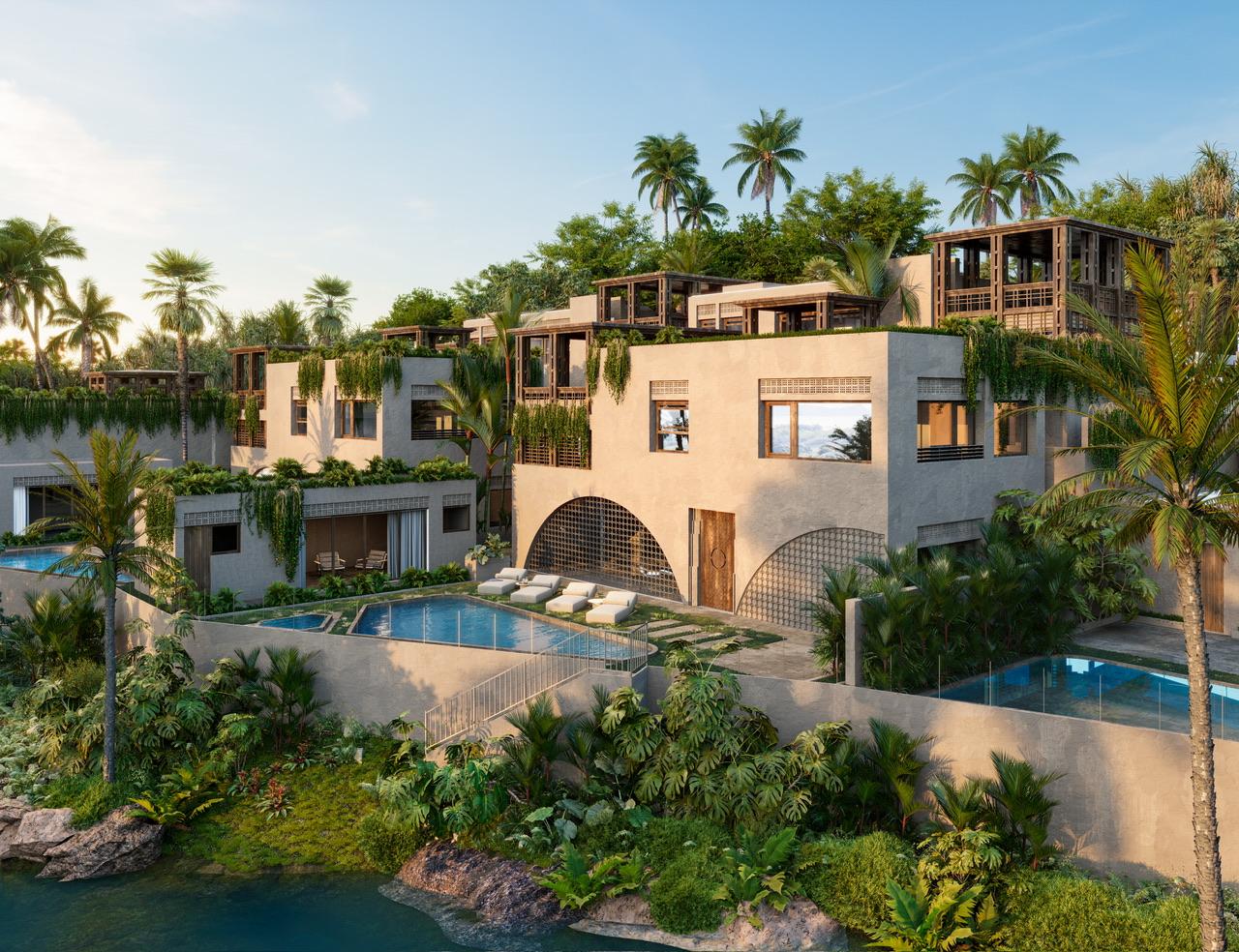
Basecamp Bali is one of the projects considers in its advisory practice when discussing investment opportunities in Ubud. According to the project information available to us, the project is being developed across 40 hectares and works with at least 80 farming families.
That makes it a relevant example of the regenerative approach. The farming families are not merely scenery around the villas. Their involvement raises the practical question of how real estate and agriculture can coexist within one area.
Precision matters here. Working with farming families does not, by itself, explain how income is shared, which agreements apply, how agricultural land is legally designated or what measurable outcomes are being achieved. An investor should verify those points separately.
The value of the concept therefore lies not only in the number of hectares or families. It lies in how the system works. Does the landscape remain productive? Is the collaboration long term? How is water managed? What role does the operator have? And how does commercial activity relate to Ubud’s capacity and character?
You may ask :
1. Is Ubud a better choice than the coast for a villa investment?
Not necessarily. Ubud has a different demand profile. Its appeal is more closely connected to nature, culture and quiet than to beaches and nightlife. That may suit a particular guest segment, but the operation must reflect it. Ask for current market evidence supporting the expected occupancy, pricing and target audience.
2. What is the financial benefit of a regenerative project?
There is no automatic financial benefit. Regeneration may strengthen a project’s distinctiveness and help preserve the qualities that attract guests over time. Returns, however, also depend on acquisition price, lease terms, operating costs, occupancy, maintenance, taxes and payouts. These elements should be modelled separately in a scenario analysis.
3. How can I tell whether regeneration is more than a marketing term?
Ask for specifics. Who manages the land? What agreements are in place with farming families? Which areas remain agricultural? How is water monitored? Are there regular reports or independent checks? A credible concept starts with documents, responsibilities and measurable assumptions.
4. What should be reviewed legally?
Have the land title, zoning, building rights, permits, lease or usage rights, contracting parties and transfer conditions reviewed. Also clarify who is responsible for infrastructure and shared facilities. Regulations can change, so confirm the current position with an independent Indonesian legal adviser.
5. How does farming relate to my villa investment?
That depends on the legal and operating structure. Farming may form part of the wider area concept, but it does not automatically give an investor rights to agricultural land or agricultural income. Ask precisely which land your investment relates to, which rights you acquire and how the agricultural component is protected contractually.
6. Which risks are specific to Ubud?
Alongside general property risks, consider access, infrastructure, water management, changing regulation and the balance between tourism growth and local capacity. A beautiful setting does not remove these risks. Proper due diligence makes them visible before you decide.
Written by : Rose
More articles
 Blog
Bali Real Estate Leasehold, Risks and Long Term Opportunity
A leasehold in Bali involves more than price and location. Understand land status, renewal terms, taxes, transfer restrictions and sustainable value before investing.
 Blog
Notary Due Diligence: Red Flags Before You Transfer an Escrow Deposit
A property deposit in Bali should follow verification, not pressure. Learn how to check the notary or PPAT, property documents, bank details and refund terms.
 Blog
Bali Where Beauty and Opportunity Grow Together
Bali is becoming more than a holiday destination. For investors, its lasting opportunities lie where property, responsible business and local participation reinforce one another.
Rather talk through your plans in person?
Our team knows every project, every plot and every regulation. Ask your question — you'll hear back from an advisor, not a salesperson.
Get in touchor reach us on WhatsApp