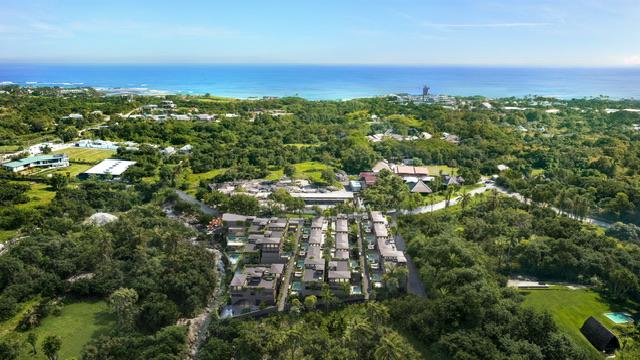
Bali Where Beauty and Opportunity Grow Together
Bali is becoming more than a holiday destination. For investors, its lasting opportunities lie where property, responsible business and local participation reinforce one another.
In this article
Bali has long attracted visitors with its landscape, culture and unhurried rhythm of life. Yet the island is becoming more than a place for short holidays. More people want to stay longer, build a business or create a home there.
That shift changes how property should be assessed. A villa or commercial space does not exist in isolation. Its value is connected to access, local demand, regulation, management and the relationship with its surroundings. In our practice as a real estate investment advisor, we see that the more resilient opportunities are usually those that fit into the life of the place rather than simply extracting value from it.
Bali as a place to live and do business
Bali’s role is evolving. Alongside holiday guests, there are long term residents, remote workers, families and entrepreneurs looking for reliable services and a sense of belonging. They need more than attractive accommodation. They also need practical infrastructure, professional services, social connections and businesses that remain useful outside the busiest travel periods.
This creates room for concepts aimed at long term living, small scale hospitality, wellness, food, workspaces and everyday services. The strongest ideas often serve more than one audience. A well run restaurant can welcome visitors while building a regular local clientele. A wellness business can support guests and residents. A residential concept can appeal to longstay occupants without becoming disconnected from the surrounding community.
For an investor, this means looking beyond a location’s holiday appeal. Ask what kind of area it is becoming, who lives there, how people move through it and which services may be needed over time. Tourist demand matters, but it is not the whole market.
A property landscape with different possibilities
There is no single Bali property market. Beachfront land, a hillside retreat, a villa overlooking rice fields and a commercial unit each have a different purpose, cost structure and risk profile. The same is true of different regions and neighbourhoods. Access, infrastructure, land use and local demand can vary significantly within a relatively short distance.
That variety allows investors to pursue different strategies. One person may be looking for a private residence with occasional rental use. Another may be considering a hospitality operation, a commercial property or land for a carefully defined development. Each requires a different form of research.
The first question should not be what a property might earn. It should be what can legally and practically be done with it. That assessment includes land rights, permitted use, licences, access, utilities, construction conditions, management and agreements with the relevant parties.
Rules and procedures can change. Have them checked by your advisor and qualified local professionals. An attractive property without a clear legal foundation is not a sound investment.
Business that serves the wider community
Every business on Bali operates within a local network. Employees, suppliers, village communities, service providers and public authorities all influence how a project works in practice.
Local participation is therefore not just a matter of good intentions. It is part of responsible operations. Where appropriate, a business can work with local employees, suppliers and materials. It can communicate clearly with neighbours and partners. It can take local customs seriously and design its operations around the realities of the area.
These choices can also strengthen a business model. Local knowledge may improve service and reduce misunderstandings. A stable team can improve continuity. A relationship with nearby suppliers can make day to day operations more reliable. None of this removes commercial risk, but it can create a stronger foundation for managing it.
On Bali, lasting value is built with trust as much as with bricks and concrete.
Trust is practical. It means keeping agreements, being transparent about expectations and taking responsibility when circumstances change. Investors, operators and local partners all contribute to that trust.
Progress with purpose
Development inevitably affects its surroundings. Water use, waste, traffic, energy and construction scale should be considered before a project is designed, not after it opens. These are operational questions as well as environmental ones.
Cultural awareness matters too. A project does not need to copy traditional architecture to respect Bali. It does need to understand the context in which it operates. That may include local customs, religious ceremonies, spatial relationships and the way a development affects the community around it.
Sustainability is therefore more than a label or a design feature. A water system is only useful if it can be maintained. Local employment creates lasting value only when people are treated fairly and have room to develop. An efficient building remains a responsible choice only when its use is legal, financially workable and appropriate to its setting.
The aim is not to freeze Bali in time. It is to allow thoughtful progress without replacing the qualities that make the island distinctive. Good development should add value to its surroundings, not merely consume them.
What this means for an investor
Bali offers different ways to combine property, lifestyle and business. The right assessment is broader than the building or the view. Consider:
- the legal structure and permitted use
- access and the quality of the immediate surroundings
- local, long term demand alongside visitor demand
- construction, management, maintenance and operating costs
- the experience and reliability of local partners
- the project’s effect on nature, culture and the community
An investment that depends only on rising visitor numbers may be exposed to a narrow set of conditions. A project that also serves residents and fits its local setting may have a broader foundation. That is not a promise of returns. It is a more complete way to assess opportunity and risk.
Choosing Bali means investing in more than an asset. It means entering a living cultural and social environment. Its long term value is best protected through transparency, legality, good management and mutual respect. Discuss your plans with an advisor who looks beyond the property itself and considers the legal, operational and local context. Regulations, market conditions and permitted uses can change have your specific situation reviewed before making a commitment.
Wrriten By : Mery Chand
More articles
 Blog
Bali: Where Beauty and Opportunity Grow Together
Ubud shows how nature, farming and real estate can reinforce one another. From NAVIN’s practice, we explore what regeneration means for investors, using Basecamp Bali as a concrete example.
 Blog
Bali Real Estate Leasehold, Risks and Long Term Opportunity
A leasehold in Bali involves more than price and location. Understand land status, renewal terms, taxes, transfer restrictions and sustainable value before investing.
 Blog
Notary Due Diligence: Red Flags Before You Transfer an Escrow Deposit
A property deposit in Bali should follow verification, not pressure. Learn how to check the notary or PPAT, property documents, bank details and refund terms.
Rather talk through your plans in person?
Our team knows every project, every plot and every regulation. Ask your question — you'll hear back from an advisor, not a salesperson.
Get in touchor reach us on WhatsApp